
The Case for Installing a Pool Fence Before Spring Arrives
Most homeowners shop for a pool fence when the pool opens, which is the slowest and most crowded point to start.
Get my fence quote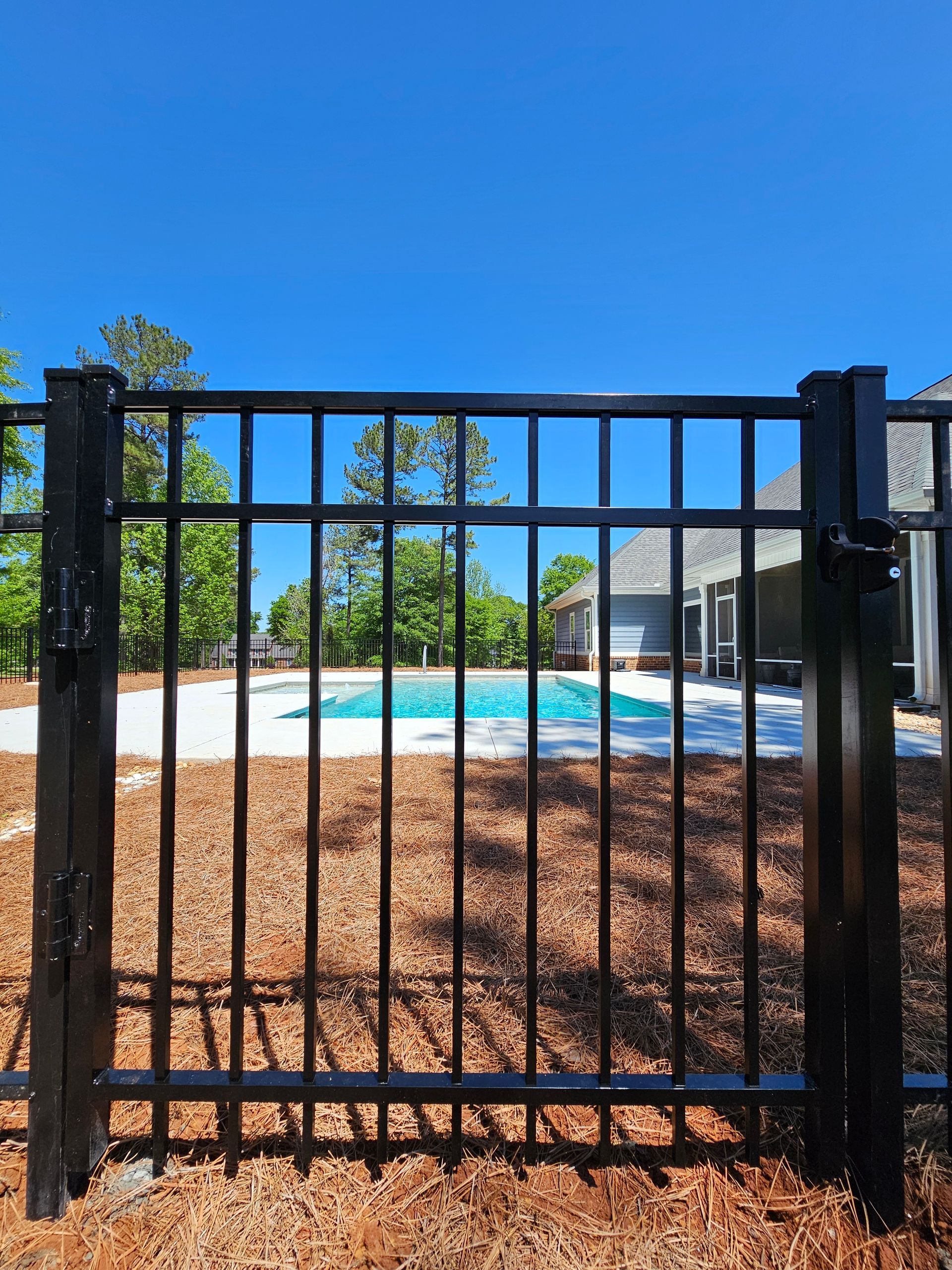
Pool fencing gets bought in May. Someone opens the pool, realises the barrier situation needs attention, and starts calling fence companies at exactly the moment every other homeowner in the area is doing the same thing.
Installing in October instead of May is better on four separate counts, and only one of them is scheduling. The other three are approval timing, soil conditions, and being finished before anyone actually swims.
In this guide
Approval has to happen first, and that takes calendar time
This is the reason that matters most and the one homeowners discover last.
A pool fence is an exterior modification, which means it goes through covenant review like any other fence. That review takes time, and it takes more time if the submission is incomplete or the proposed line needs revising. None of that can be compressed because you would like to swim next weekend.
A homeowner who applies in October has the whole winter as buffer. If the application needs a revision, there is room for it. If the approved height differs from what was planned, the design can be adjusted without anyone waiting. The same homeowner applying in May is trying to fit review, revision, scheduling and installation into the weeks before summer, and something gives.
Pool barriers also tend to attract careful review because they sit in a visible part of the yard and because the material is usually ornamental rather than solid. Getting that specification right in advance is easier when nobody is under time pressure.
Houston area clay behaves better in the cooler months
The soil here is expansive clay, and that is not a minor detail for anything set in a post hole.
Clay swells when it takes on water and shrinks when it dries out. Through a Gulf Coast summer, prolonged heat and dry spells pull moisture out of the ground, and the clay contracts and cracks. Setting posts into soil that is at its driest and most shrunken means those posts are set into a ground condition that will change substantially the moment real rain returns.
Cooler months bring more consistent soil moisture. Digging is easier, the hole holds its shape better, and concrete cures against soil that is closer to its average condition rather than at one extreme. A post set under those conditions is working with the ground rather than against it.
This matters more for a pool fence than for a privacy fence, because a pool barrier has to keep working as a barrier. A gate that sags or a section that shifts because the ground moved underneath it is a gap, and a gap in a pool fence is the whole problem it was installed to prevent.
Crews are available and schedules are real
Fence demand in this region peaks in spring and stays high through early summer. Everything gets harder in that window: lead times stretch, crews are stacked across multiple jobs, and the weather that makes spring attractive also brings the rain that pushes schedules.
Booking in autumn or winter means a quoted start date is more likely to be the actual start date. It also means the crew installing your fence is not rushing to the next job, which shows up in details like how gate hardware is set and how carefully the line is run along an irregular pool deck.
Rain is the other factor. Houston gets rain year round, but the spring pattern delivers it in the volume that stops post digging and delays concrete. Autumn and winter are not dry, but they are generally more workable for ground work than April and May.
Finished before the season rather than during it
The practical argument is simple. A fence installed in November is complete, cured, settled and tested long before the first warm weekend.
A fence installed in late May is being built while the pool is in use, which means the barrier is incomplete during exactly the period it is most needed. Construction around a pool also means equipment, open holes and material in the yard at the point in the year when children are most likely to be out in it.
There is a settling consideration too. Concrete needs time to cure properly, and a new fence benefits from a few months of ordinary weather before it is leaned on, climbed near and used as the boundary it is meant to be. Installing ahead of the season gives it that.
What a pool barrier actually has to do
Whatever the timing, a pool fence has a job beyond looking right, and the requirements are worth understanding before choosing a style.
Pool barrier rules are set by local code and by your covenants, and they commonly address minimum height, the maximum gap beneath the fence, the spacing between vertical members, and whether the design offers anything climbable from the outside. Gates usually carry their own requirements, typically self closing and self latching with the latch positioned out of easy reach of a small child, and swinging away from the pool.
Those specifics vary, so confirm what applies to your property with your local authority and your covenant administration rather than working from a general figure. The point of knowing the categories in advance is that they shape the material and style decision rather than being checked afterwards.
Wrought iron is the common answer for pool enclosures and for good reason. The vertical picket design offers nothing to climb, it does not obstruct the view across the yard to the water, and it holds its line without the warping or sagging that can open gaps in other materials. It is the material most often specified where a fence has to perform as a safety barrier and still look like part of the landscaping.
About FenceIt
FenceIt is a residential fence contractor built around the idea in our tagline, Real Fences. Real Easy. We are not a national franchise. The company is led by Jeremy Humphrey, whose background spans more than a decade across construction, landscaping and real estate, and we work exclusively with residential homeowners rather than splitting attention across commercial work.
Wrought iron is among the styles we install, alongside cedar privacy fencing, vinyl, and three and four rail designs. Our crews carry a three year workmanship warranty, we give same day on site pricing so you are not waiting on a quote, and financing is available. Call us at (281) 516-8569.
Pool fencing in The Woodlands, TX
Pool fence projects in The Woodlands have to satisfy covenant review alongside any applicable local code, and that combination is the reason the off season timing argument is stronger here than it would be somewhere with no architectural review at all. The review period is real calendar time and it sits in front of installation rather than beside it.
The soil across The Woodlands and the wider Northwest Houston area is the same expansive clay that makes post setting season dependent, and lots here frequently include drainage easements and reserve areas that affect where a barrier can run. Both are easier to work around in a project planned over the winter than one compressed into the weeks before summer.
Homeowners in The Woodlands can review the full range on our residential fencing page.
Plan your pool fence for the off season
If a pool fence is on your list for next summer, the work to do now is the approval and the planning. That is the part with a fixed timeline, and starting it in autumn is what makes a spring deadline comfortable instead of tight.
Contact us to talk through your project, or see how our fence installation process works from quote to completion.
Frequently Asked Questions
Why install a pool fence in fall instead of spring?
Four reasons. Covenant approval takes calendar time and sits in front of installation, so autumn leaves room for revisions. Cooler months bring more consistent soil moisture for setting posts in expansive clay. Crew availability and schedule reliability are better outside the spring rush. And the barrier is finished and settled before anyone is swimming.
How does Houston soil affect fence post installation?
The soil here is expansive clay, which swells with moisture and shrinks when dry. Posts set during a hot dry spell go into ground at its most contracted, which then changes substantially once real rain returns. Cooler months offer more consistent moisture, so holes hold their shape and concrete cures against soil closer to its average condition.
Does a pool fence need covenant approval in The Woodlands?
A pool fence is an exterior modification, so it goes through covenant review like any other fence. Pool barriers often attract careful attention because they sit in a visible part of the yard and use ornamental rather than solid material. Confirm what applies to your specific property with covenant administration before finalising a design.
What does a pool barrier have to comply with?
Requirements come from local code and your covenants, and commonly address minimum height, the maximum gap beneath the fence, spacing between vertical members, and whether anything is climbable from outside. Gates typically must be self closing and self latching, with the latch out of a small child's reach and the gate swinging away from the pool.
Why is wrought iron the usual choice for pool fencing?
The vertical picket design offers nothing climbable, it does not block the view across the yard to the water, and it holds its line without the warping or sagging that can open gaps in other materials. That combination matters because a pool fence has to keep performing as a barrier, not merely look correct on the day it goes in.
How far ahead should I start a pool fence project?
Allow for the approval period plus installation, and start in autumn if the fence needs to be ready for summer. That sequencing gives room for an application revision without pressure, lets you pick a schedule rather than take what is available, and means concrete has cured and the fence has settled well before the pool is in regular use.
Get your pool fence on the calendar
FenceIt installs wrought iron, cedar, vinyl, and rail fencing for homeowners, with monthly payments for up to 24 months available. Call (281) 516-8569 or contact us online.
Get my fence quote